Somatic Armor
01 // Heavy Hands
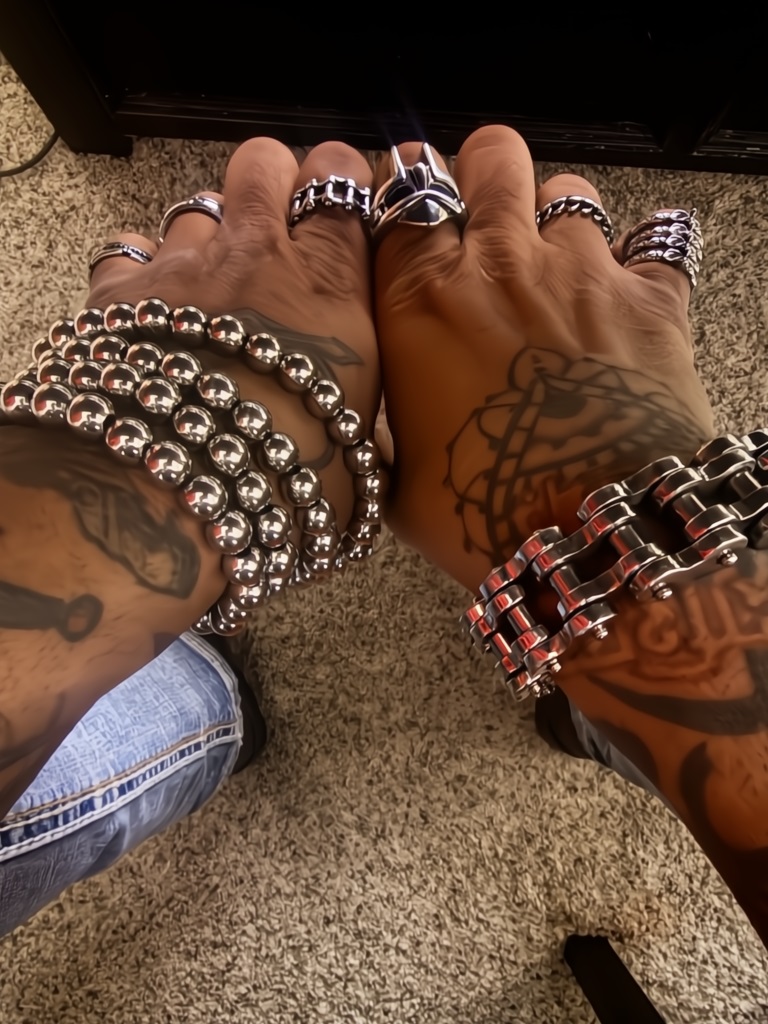
108
The 108 beads on my left wrist represent the complete human experience — every affliction, desire, and distraction. In Buddhism, the 108 kleshas: greed, hatred, delusion, the full catalog of being human and struggling. In Hindu and yogic tradition, 108 is where the body meets the cosmos — 108 nadis converging at the heart chakra. 108 marma points where consciousness and matter intersect.
The Vedic mathematicians mapped it into the sky: the Sun's diameter is 108 times Earth's, the distance to the Sun is 108 times the Sun's diameter. The number itself — 1, 0, 8 — is the individual, emptiness, infinity. Working through the beads isn't counting. It's moving through the full scope of human experience, one breath at a time, until you come back to the Guru bead. The teacher. The still point.
The Chain On The Right
The motorcycle chain on my right wrist is mechanical infrastructure. Every link exists because it has to — it transfers power, drives motion, connects the engine to the wheel. Engineered to hold under load, under heat, under conditions that would destroy something decorative. The right hand is the hand of doing — across traditions, the hand of agency, of how you show up and what you put into motion.
Wearing the chain there is a statement: I am the mechanism by which things get done. Functional under pressure. Built to transfer force from intention to outcome. You feel the weight when you reach, when you grip, when you act. A reminder that your actions have mass. What you do lands. Left wrist holds what grounds you. Right wrist carries the weight of what you do with it.
02 // Heavy Boots
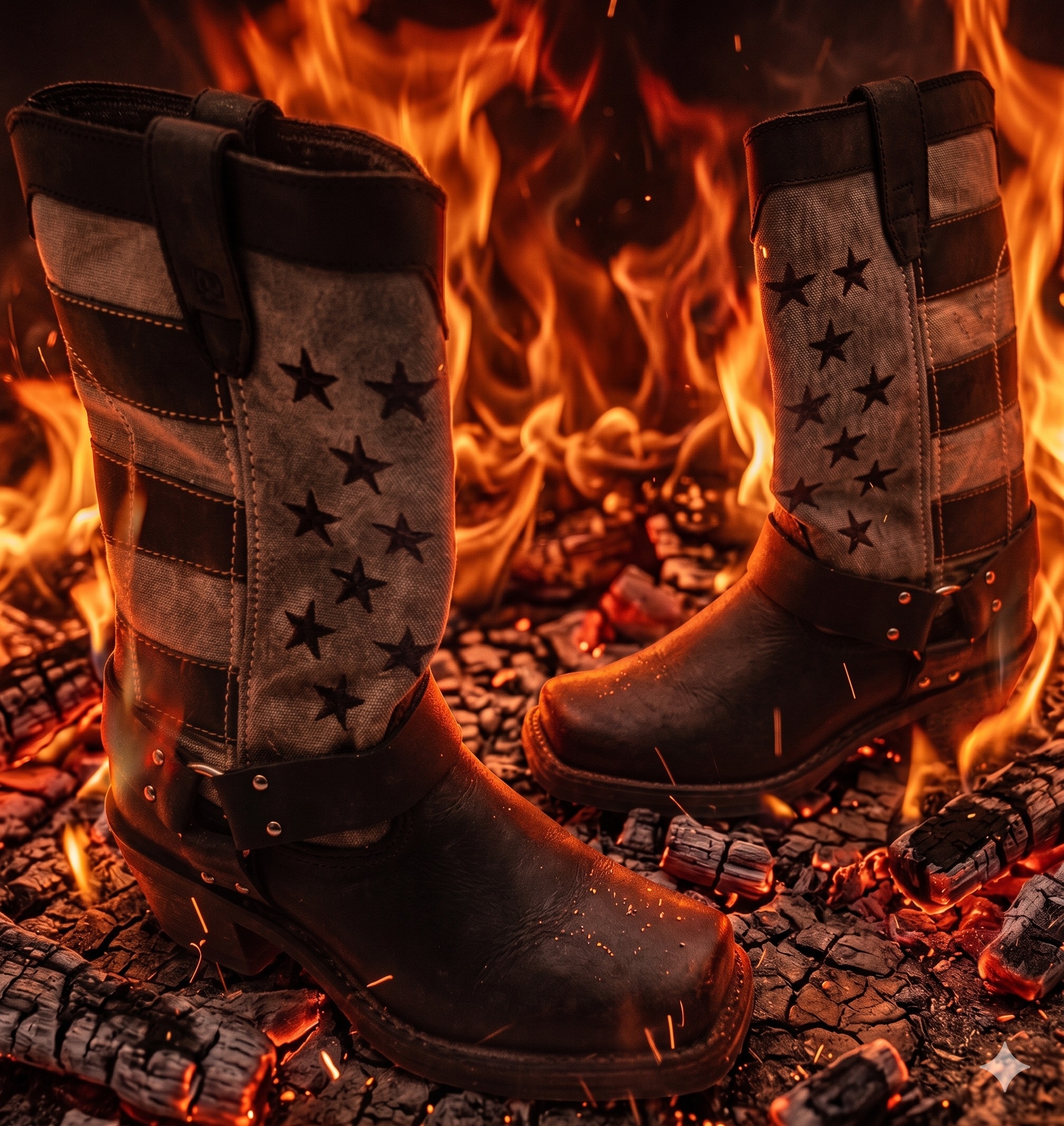
Weight Carried On Purpose
The heavy boots are not style. They are consequence. Weight carried on purpose. Protection made physical. The boots hit first — heavy, deliberate, unmistakable. They make noise when you walk, and that noise is not performance. It is information. A warning. A statement that you are here before anyone turns to look.
They protect, but that is only part of it. They also regulate. The boots pull you down into the ground. They create a physical language of weight, sound, and presence. They ground you in both the literal and psychological sense.
Anchored
Every step carries weight. Every step is intentional. Every step is a reminder that you exist with force, with mass, with consequence. The boots don't let you drift. They keep you anchored. They keep you real.
The sound they make — the deliberate impact on the ground — is grounding. Not theater. Not decoration. Just the fact of presence made audible. The boots announce that you are solid, defended, and fully here.
03 // Heavy Neck
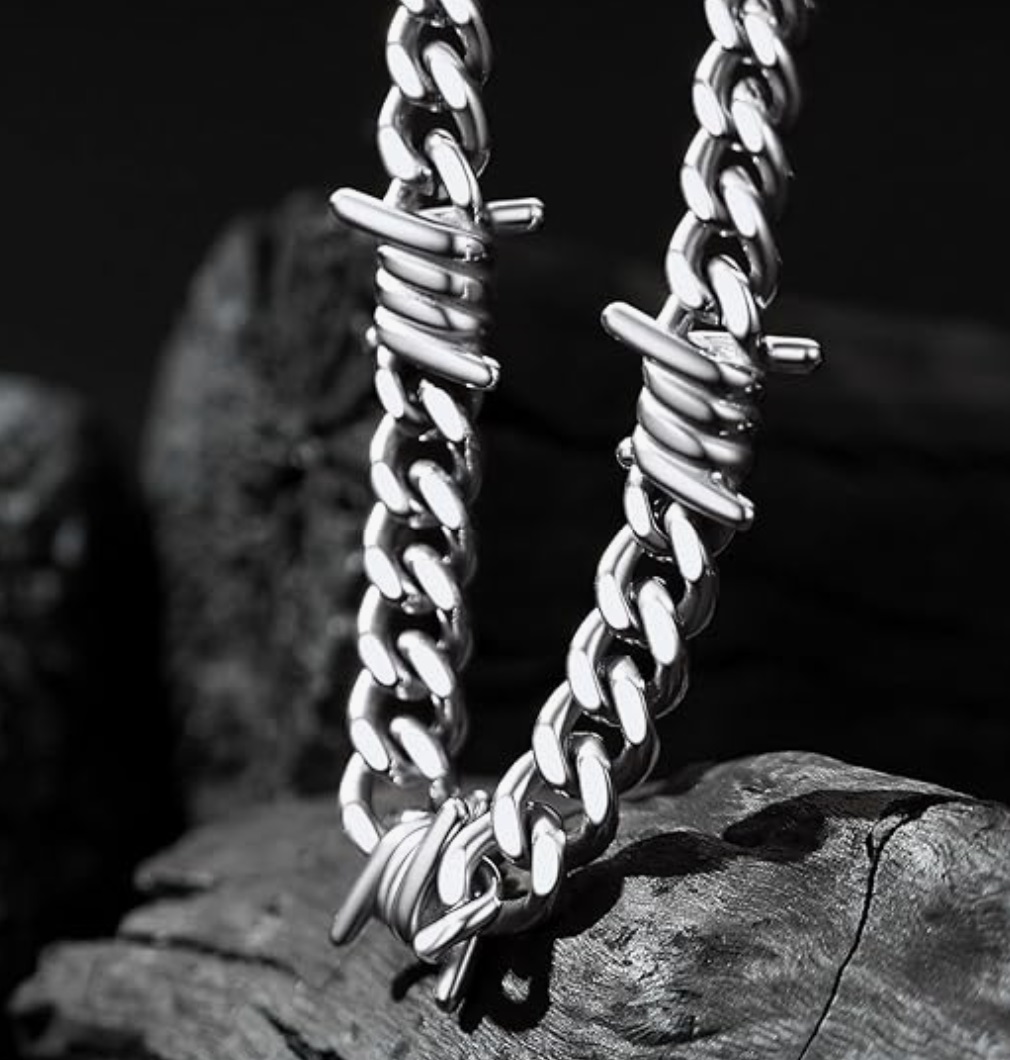
Dangerous Now Under Control
The barbed wire chain is something dangerous now under control. Used as adornment, but also a reminder. Barbed wire shaped as decoration. Your nervous system saying: I have been through the thing that was supposed to stop me, and I am wearing its shape. That is not celebration. That is memory converted into form.
A constant sensation against the skin. A tactile fact. The barbed wire sits at the throat — the most vulnerable point, the place where words and breath pass through. Wearing it there is a statement: what was meant to wound me I now wear. What was meant to keep me out is now mine.
Memory As Form
It's heavy. It presses. It reminds. Every time you feel it against your skin, you remember: you went through what was supposed to stop you. The proof is around your neck.
The barbed wire around your neck makes the message clear. You can make it through the barbed wire to the other side. You did. And now you wear it.
04 // Heavy Presence
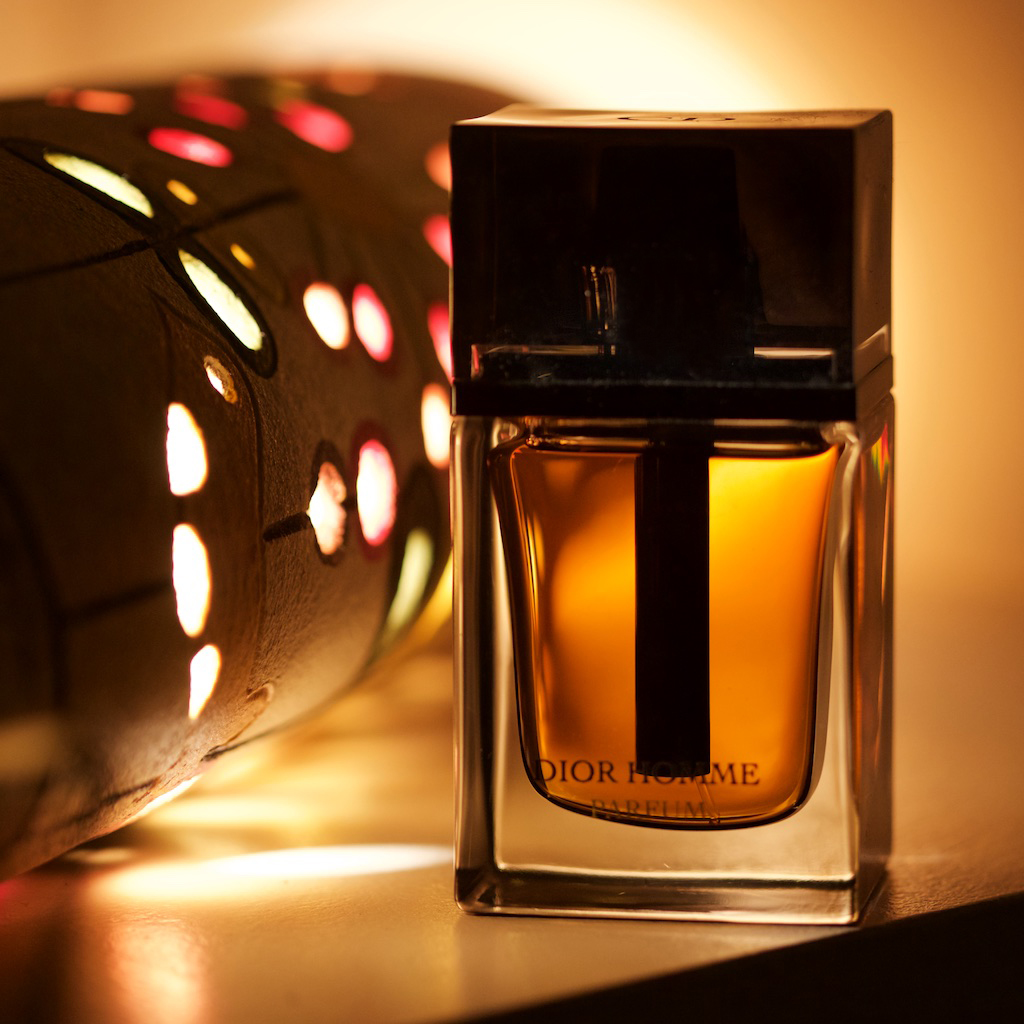
The Invisible Shield
Fragrance creates a shield. It's the part of your armor you choose fresh every single day, and it works differently than everything else. Scent bypasses the nervous system entirely — it goes straight to the limbic system, the part of your brain that handles memory, emotion, and survival instinct. No filter. No negotiation. Direct access.
That's why the 4AM ritual matters. Before the world makes demands, before your armor takes hits, you give your nervous system a choice. You choose how you'll occupy space. You choose what arrives before you do. Fragrance is invisible, but it's not subtle. It announces. It lingers. It claims territory.
Subtle Elegance Amongst Curated Chaos
Heavy hands. Heavy neck. Heavy feet. Heavy presence. The physical armor is loud — chains, boots, barbed wire. The fragrance is the counterpoint. Subtle elegance amongst the curated chaos. It says: I am deliberate about all of this. Every layer chosen. Every piece intentional.
The boots hit the ground. The chains catch the light. The barbed wire presses against your throat. And the fragrance fills the air around you — the final boundary, the invisible extension of everything you've built. You don't just survive in your body. You occupy space.
05 // Heavy Blade
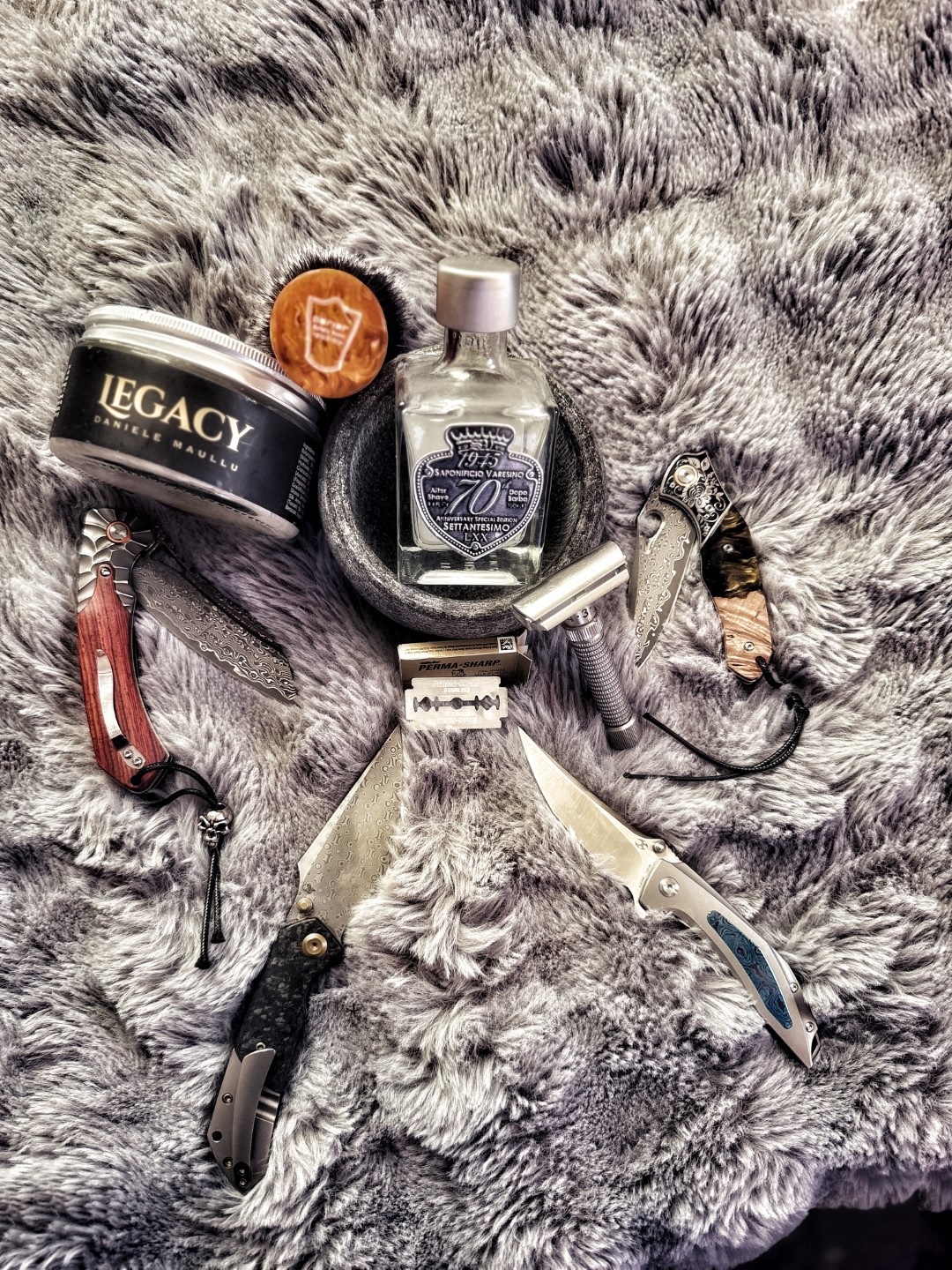
Edge Under Control
A safety razor is edge under control. It takes something inherently dangerous — a blade — and puts it in a form that demands steadiness, intention, and respect. You cannot be sloppy with it. You cannot dissociate through it. You have to be present with your own face, your own hands, your own pressure.
The point is never aggression. It is controlled force. Precision. Deliberate contact. A safety razor turns sharpness into ritual instead of chaos. It rejects excess and gimmick. One blade. Clean lines. Weight in the hand. No plastic theater, no overdesigned nonsense. A safety razor says: pay attention. The edge is real, so your presence has to be real too.
Shaving with a safety razor is daily calibration. Steel against skin. Pressure moderated. Movement slowed down. The body learning, over and over, that sharpness does not have to mean harm. It can mean refinement. It can mean care.
Sharpness With Restraint
Pocket knives and folding knives are edge with restraint. A fixed blade says one thing: exposed force. A folding knife says something more precise. The edge is there, but it stays contained until it is needed. Closed, it is disciplined. Open, it is exact.
A good pocket knife is built around function, precision, and readiness. Clean mechanism. Intentional design. Something you can feel in the hand. The knife is less about aggression and more about competence — the felt knowledge that you can meet reality cleanly.
The folding part matters. The blade disappears back into itself. Contained. Safe. Ordered. The edge exists, but it is not running the whole show. You decide when it comes out. You decide when it stays put. Not the absence of intensity, but mastery over it. Blades represent precision, control, readiness, and contained force. The edge is real, but it answers to you.
